
Alan spent twenty-five years in the groves of academe, with a successful research career and over fifty publications to his name. During that time, Alan also spent several years working part-time in the field of consumer market research. As an accredited Olympic sport psychologist from 1985 to 2000, Alan saw a gradual acceptance of the tools and techniques psychologists can bring to people striving to be the best they can be. Alan says modestly “I had a very small – but significant – part to play in 25% of the medals that Team GB brought back from the Sydney Games.”
“Well, I don’t suppose I put any real influence on her or anything like that, just that conversation I remember having which resulted in her finding her true self.”
But my first question is what is soul?
I think the soul is an interesting concept. I grew up in Ulster, a member of the Scot/Irish community there. I am certain that I share with them what they call the ‘second sight’. This is an ability to see and feel soulful things. For example, as I watched my dad die, I saw his soul leave his body and shoot off into the sky. So the soul is something to do with being a human being on this Earth.
I also think lots and lots of animals have souls. There was a little movie of a woman swimmer I saw the other day. She was an underwater swimmer who had befriended sharks who had hooks stuck in their mouths. One shark became her friend, and she just put her hand the shark’s mouth in and got the hook out. She got about 300 hooks out of sharks, and they were talking to each other and other sharks were coming over and allowing her to do it, too. I thought, “What is that about?” It’s not about being a human being. It’s nature, it’s about the soul thing, and the soul is not something that is unique to us humans.
It feels like we can communicate soul to soul, like those sharks and that woman.

I’ve realized that soul is something to do with consciousness, which of course psychologists have never managed to nail. They have no idea what it is, and I think it exists independent of the individual, and what I saw coming out of my dad when he died was his consciousness. We call that soul, so it’s consciousness but it doesn’t have to be in somebody, it can be somewhere else. Who knows?
So that’s the soul. How does it relate to organizational life? If it does.
How long have I got? Well, firstly, I don’t think it ever puts on much of an appearance in most places I’ve been. People don’t think like that, there is this terrible capitalist mindset which is almost completely cuts out any possible idea that people could be soulful people. It’s not about that, it’s not about taking account of their vulnerability, their strengths, their deep connection to the universe. They’re only really interested in turning a bit more profit.
You look at New Zealand and that wonderful woman Jacinda Arden …she is absolutely, spiritually, terrific. She’s got it all, and you can read it and you think, “She tells me to do this, I’ll bloody do it,” because she’s got real authenticity. When we talk about sport, her comment during COVID, “We’re going in hard and we’re going in early.” Which is used in rugby of course, and everybody said, “Oh yeah, we’ll do it.” So much so, that they’re pretty much free of it.

This Photo by Unknown Author is licensed under CC BY-SA
Have you got any examples of the impact of soul you have come across in sport?
Well, I spent 15 years working with Olympic performers, and one or two other people that I met who were quite soulful, in that some of their performance was clearly coming from a place that I couldn’t put my finger on. They were quite extraordinary people.
One of these was Shirley Robertson. I worked with her when she was quite young. She was so sweet and gentle, and I found myself saying, “Look, if you really want to get a medal here, you’re going to become a killer. Stop being nice to people, you’re not in the business of being nice. You’re in the business of doing something really special.” And she suddenly blossomed, and she got two medals in the end.
I thought that was quite remarkable, because she turned from being quite gentle, to finding something incredibly powerful inside her. Well, I don’t suppose I put any real influence on her or anything like that, just that conversation which resulted in her finding her true self.
This Photo by Unknown Author is licensed under CC BY-SA
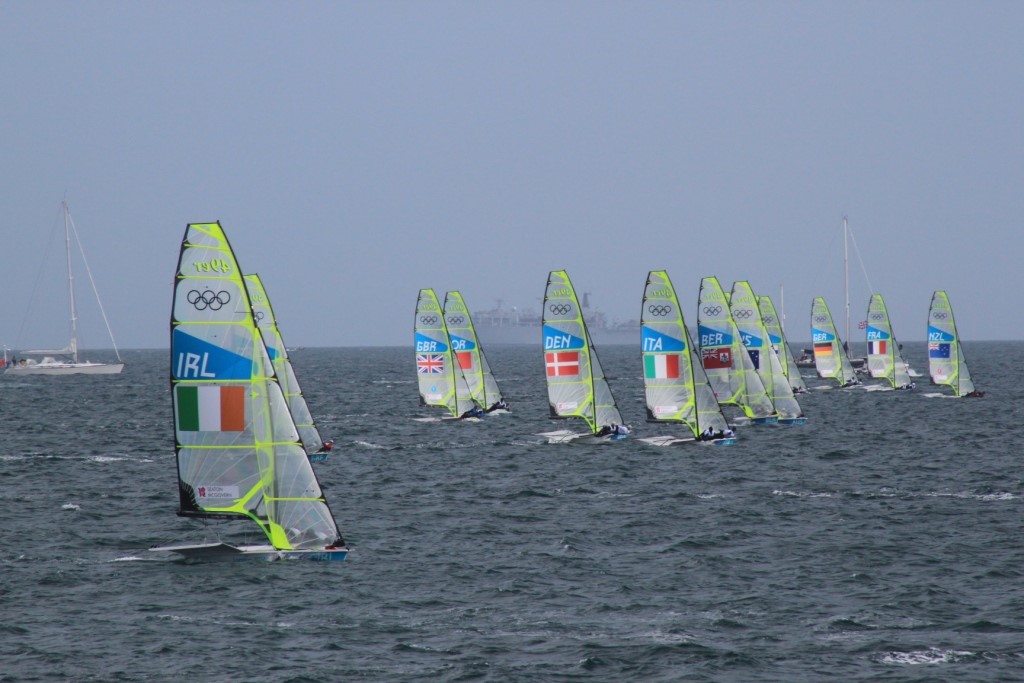
The other guy was the amazing Ben Ainslie. I met Ben when he was about fifteen, and he was already a very gifted sailor. The only thing I was able to do for him was to help him to overcome his fear of big waves, because the little boat that he sailed was very unstable and it used to fall over quite a lot. Once he got over that panic, he just suddenly became unstoppable. He was certainly a very good sailor, but there was something very strange about Ben, his strength, and his drive to succeed was coming from deep, deep inside him, which was quite special. He won medals at five consecutive Olympics from 1996 onwards, including gold at the four Games held between 2000 and 2012.

This Photo by Unknown Author is licensed under CC BY-SA-NC
I’ve realized that soul is something to do with consciousness, which of course psychologists have never managed to nail. They have no idea what it is, and I think it exists independent of the individual, and what I saw coming out of my dad when he died was his consciousness. We call that soul, so it’s consciousness but it doesn’t have to be in somebody, it can be somewhere else.
What are we talking about here in terms of practicalities that people can grasp and work with, that potentially bring the soul, the consciousness of people, to life in business?
Well, we can go back to New Zealand, Jacinda Arden has got it right, I think. It’s about treating people very much as bodies with souls in them. So, it’s about integrity, it’s about empathy too.
I worked with another sailor, a man called Pete Goss when he was racing around the world, and he was quite remarkable. He treated people as equals, he had integrity. When you met him, his integrity shone through. What was amazing was, he was an ex-SAS man, I think. So, maybe he had something happen in his life that had made him realize, “I’m not particularly special, but I am me.” He wasn’t that big but there was a presence to him which was quite remarkable. I don’t know whether you picked that up, he wasn’t just this bloke on a boat, he was the centre of what was going on. But he wasn’t directing people, it was about presence and it was about treating people with dignity and respect.

This Photo by Unknown Author is licensed under CC BY-NC-ND
What do we need to work on as a priority, do you think, to become more soulful, more soul-driven, as teams, as organizations, as communities, as country, as a planet?
Well, I think one of the biggest issues is people’s mental models of how organizations work, how societies work. There’s such a lot of stuff these days, if you look on Facebook, there’s a lot of people saying, “Look, we don’t want to be like this, stop lying to us, be authentic, have a bit of integrity. We’ll deal with whatever it is, but we need you to treat us as adults” I think what they’re really saying is, “We need to be treated like soulful people. Stop treating us as soulless.” I think that’s probably one of the biggest issues. How do you get management, whatever that looks like, to treat people the way Pete Goss treated people? You’ve got to change their mindset and behaviour. I don’t know, that’s got to go back quite a long way, we’ve got to be talking about this kind of thing from an early age. You could have an A level in it, for example.

This interview is one of 60 I’ve completed this year with a mix of past customers and other leading industry figures. Do connect with me on Linked In or get in touch via our website if you’d like to know more about the research findings and/or explore how to drive your business forward…with soul.
You can book me to speak personally at an event or meeting, online or (circumstances allowing) face to face.